Waterotor Energy Technologies Inc.
Scaling the Systems Behind the Growth
Waterotor Energy Technologies develops hydrokinetic power systems that generate electricity from moving water. Its patented technology operates in flows as low as 2 to 6 mph, providing continuous renewable energy for off-grid, industrial, and utility-scale applications. By 2023, the company had validated its technology through pilot projects and raised $18 million in capital. As interest from investors, partners, and industry stakeholders increased, Waterotor engaged Roadmap to help define how the company should present its technology and opportunity as it entered its next phase of growth.

Our Role
- Strategic Foundations
- Marketing Audit and Marketing Plan
- Competitive Analysis
- Website Redevelopment
- HubSpot CRM Functional Requirements Document (FRD) and Implementation
- Sales Pipeline Architecture
- Marketing Automation and Segmentation
- Reporting Dashboards
The Need
Waterotor engaged Roadmap to help define the next phase of its go-to-market approach. As interest in the company’s hydrokinetic technology continued to grow, the team wanted a clearer way to communicate its technology, market opportunity, and licensing model to investors, partners, and industry stakeholders.
Roadmap began the engagement with strategic work to help Waterotor establish a clearer go-to-market strategy that would guide how the company presented its technology and managed inbound engagement.
This work included reviewing the company’s marketing activities, digital presence, and inbound engagement to better understand how the opportunity was being presented online and how growing interest could be supported.
The Challenge
The strategy phase revealed that Waterotor’s digital infrastructure had not yet been designed to support growing engagement.
Website inquiries averaged between 50 and 100 per month, yet there was no centralized system to capture and manage those interactions. Key information about the technology, market opportunity, and licensing model was difficult for visitors to access on the website, making it harder for investors and partners to quickly understand the opportunity.
At the same time, inbound inquiries from the website were not connected to a CRM system for follow-up. Conversations with investors and partners were largely managed through email, with limited visibility across the team.
The challenge was to translate the strategic work into practical systems: rebuilding the website so it clearly communicated the opportunity and implementing a CRM that could capture inquiries and manage ongoing engagement.
The Solution
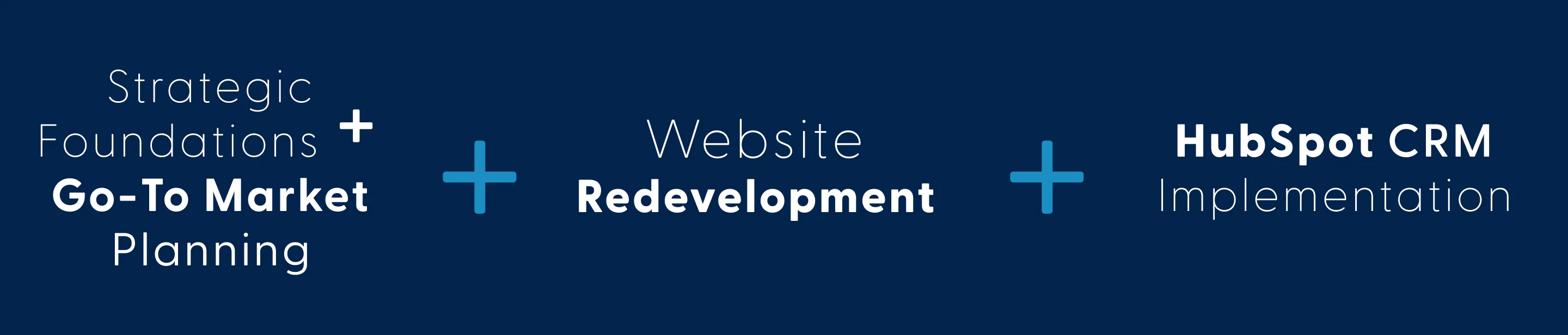
1. Strategic Foundations and Go-to-Market Planning
Roadmap began the engagement with a Strategic Foundations process that included a marketing audit, competitive analysis, and the development of a structured marketing plan.
This work helped clarify how Waterotor’s technology, market opportunity, and licensing model should be communicated to investors and partners. The output of this phase provided the structure needed to organize the company’s digital presence and engagement processes.
These insights directly informed the redevelopment of the Waterotor website and the design of the HubSpot CRM system implemented in later stages of the project.
2. Website Redevelopment
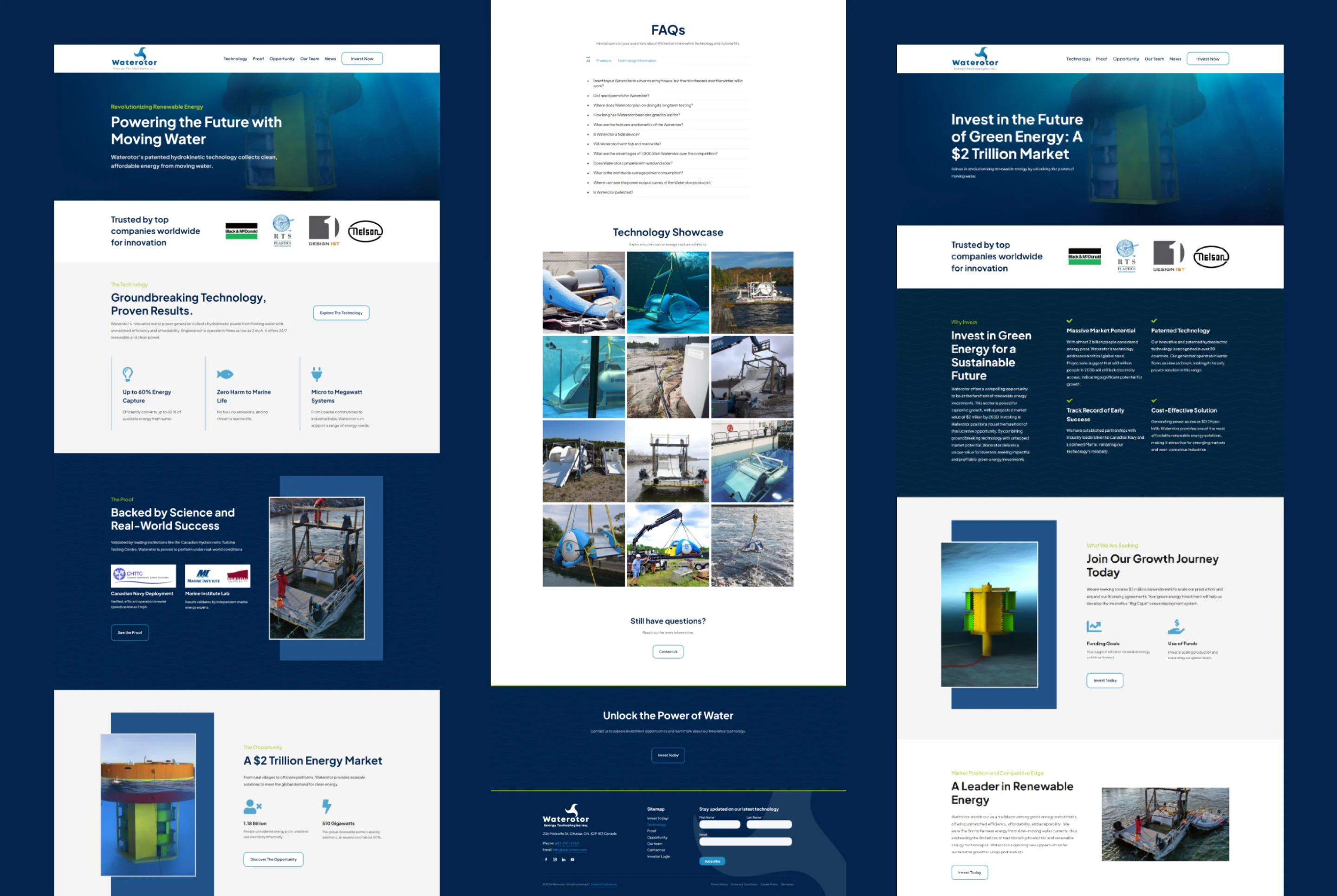
Using the insights from the strategic work, Roadmap redesigned the Waterotor website to better communicate the company’s technology and opportunity.
The new site structure was designed to guide visitors through the key components of the business, including:
- Overview of the hydrokinetic technology
- Product capabilities and applications
- Market opportunity and industry context
- Investor and partnership information
Content was reorganized to make complex technical information easier to understand while maintaining the level of detail required for technical and investor audiences.
The redesign also improved the website’s ability to capture inbound engagement. Contact forms and inquiry pathways were streamlined so visitors could easily request information or initiate conversations.
SEO structure and analytics tracking were also implemented to monitor website performance and engagement.
As part of the implementation, Roadmap integrated Termly to manage privacy policies, cookie consent, and ongoing compliance, ensuring that visitor data collection was supported by appropriate governance.
3. HubSpot CRM Implementation
Once the website structure and engagement pathways were defined, Roadmap implemented HubSpot as Waterotor’s centralized CRM. This HubSpot implementation created a structured system for capturing website inquiries, managing follow-up, and tracking ongoing conversations with investors and partners.
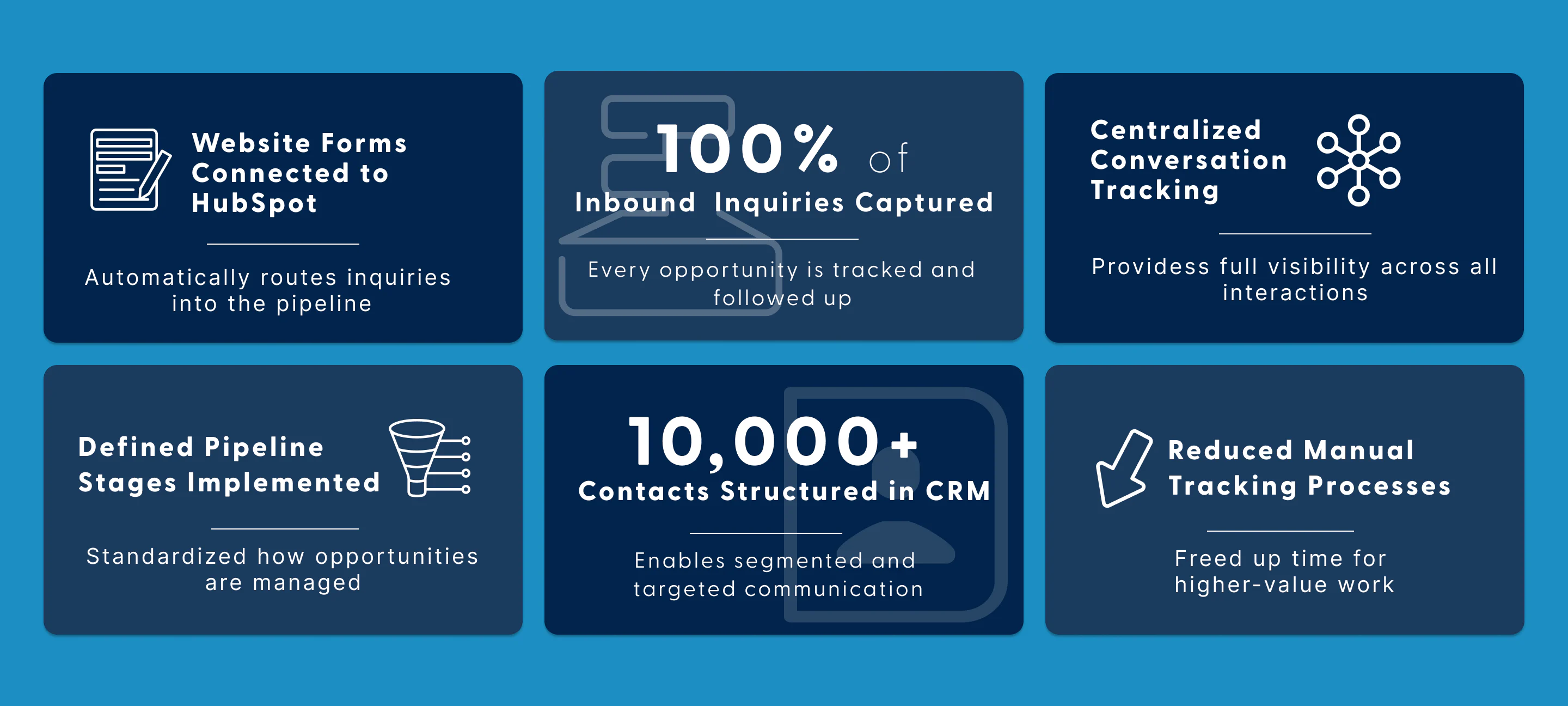
Website forms were integrated directly with HubSpot so that all inbound inquiries were automatically captured and routed for follow-up.
Before implementation, Roadmap developed a Functional Requirements Document (FRD) outlining the CRM structure, pipeline stages, segmentation logic, and reporting requirements.
Based on this framework, HubSpot was configured to include:
- Defined pipeline stages for investor and partner conversations
- Contact segmentation by stakeholder type and region
- Centralized communication tracking
- Automated confirmation emails for inbound inquiries
- Reporting dashboards for pipeline visibility
The system was also structured to support a contact database of more than 10,000 records, allowing the team to organize and segment stakeholder communications.
By implementing HubSpot, Waterotor gained a centralized system to track engagement and manage ongoing conversations.
The Results
Following the strategy work, website redevelopment, and CRM implementation, Waterotor now operates with improved systems for managing inbound engagement and stakeholder communications.
Website and Lead Capture
- Website inquiries are automatically captured and tracked within the CRM
- Contact forms are integrated directly into pipeline workflows
- Visitors can more easily access information about the technology and partnership opportunities
CRM and Operational Visibility
- 100% of inbound inquiries captured and organized in a centralized system
- Segmented management of a 10,000+ contact database
- Real-time visibility into ongoing conversations and follow-up activities
Operational Improvements
- Defined pipeline stages for investor and partner engagement
- Reduced manual tracking of communications
- Improved coordination across team members managing stakeholder engagement
These systems provide Waterotor with the digital infrastructure needed to manage ongoing engagement while maintaining clear visibility across conversations and opportunities.
Build the Systems That Support Growth
If your organization is generating traction but lacks the systems needed to manage engagement and follow-up, Roadmap can help.
From go-to-market planning to website development and CRM implementation, we work alongside teams to build the infrastructure required to support growth.
Let’s Get StartedFrom Ambitious Goals to a Sustainable Revenue System
Next